
ESSENTIAL TREMORS
Advanced Root-Cause Care
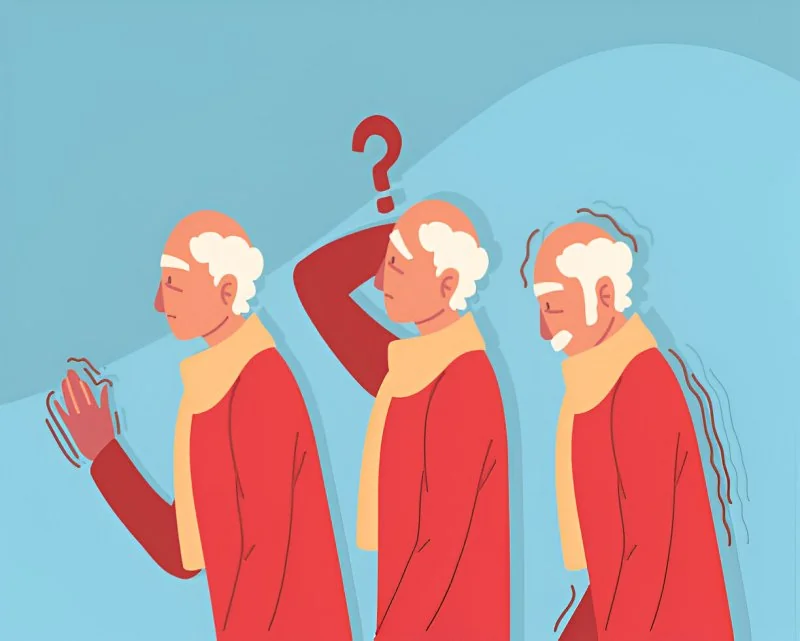
Essential tremor is an involuntary, rhythmic neurological contraction that causes shaking of the hands, head, voice, or arms during purposeful activity. At Sanjeevani Homoeopathy, Dr. Jitendra Shukla provides targeted constitutional therapy to calm neuromuscular hyper-excitability, restore fine motor control, and arrest tremor progression without sedation or drug dependency.
Regain Hand Firmness & Motor Stability
Fill in your details and Dr. Shukla's clinical team will evaluate your case. Consultations are available both in-clinic at Lucknow and via secure worldwide video appointments.
Request Consultation
Select your consultation mode and submit your medical details below.
What is Essential Tremor?
Essential tremor is one of the most common neurological movement disorders characterized by involuntary, rhythmic oscillation of a body part. Unlike Parkinsonian tremors which occur primarily at rest, essential tremors are kinetic or action tremors—meaning they intensify during intentional movement, such as lifting a glass of water, writing, holding silverware, or fastening buttons. While often starting mildly in the dominant hand, the condition can progress over time to involve both hands, the head, vocal cords, and lower limbs.
Causes of Essential Tremors
Cerebello-Thalamocortical Loop Dysfunction: Abnormal synchronized electrical oscillations between the cerebellum, thalamus, and motor cortex disrupt the smooth transmission of movement commands.
Genetic Predisposition (Familial Tremor): Approximately 50% to 60% of cases have a clear genetic inheritance pattern, often passing through generations with an autosomal dominant trait.
Neurotransmitter Imbalances: Deficiencies in GABAergic inhibitory neurotransmission allow unchecked electrical firing along motor tracts.
Emotional & Physiological Stress: Sympathetic nervous system over-activation, caffeine, anxiety, and sleep deprivation significantly amplify tremor amplitude.
Age-Related Neuro-Degeneration: While onset can occur at any age, incidence increases with aging as neuromuscular compensatory mechanisms decline.
Types & Presentations of Tremors
Action / Kinetic Tremor: Visible shaking when performing deliberate tasks such as writing, typing, pouring tea, or bringing food to the mouth.
Postural Tremor: Shaking that manifests when holding a limb against gravity, such as extending the arms straight forward.
Head Titubation: Involuntary nodding ("yes-yes") or shaking ("no-no") movements of the cervical spine, often worsening during social interactions.
Voice Tremor: Rhythmic quivering or wavering pitch of the voice caused by tremor of the laryngeal muscles.
Dystonic Tremor: Tremors combined with twisting or abnormal postural cramping, frequently seen in focal dystonia and Writer's Cramp.
Symptoms of Essential Tremors
Difficulty in Fine Motor Tasks: Deteriorating handwriting (spidery script), spilling liquids while drinking, and difficulty threading needles or fastening buttons.
Bilateral Hand Shaking: Usually begins in one hand and progresses to the other hand over years.
Stress & Fatigue Aggravation: Noticeable worsening during public speaking, examinations, professional meetings, or exhaustion.
Absence of Muscle Rigidity: Unlike Parkinson's disease, patients with essential tremor retain normal arm swing during walking, normal facial expression, and no cogwheel stiffness.
Temporary Suppression during Sleep: Tremors completely disappear during sleep, confirming the absence of fixed mechanical lesions.

Advanced Homeopathic Protocol for Essential Tremors
Conventional medicine relies heavily on beta-blockers (propranolol) or anticonvulsants (primidone), which frequently cause fatigue, hypotension, bradycardia, sexual dysfunction, and cognitive clouding. In contrast, Dr. Jitendra Shukla's classical constitutional homeopathic treatment works at the sub-cellular neuro-electrical level. By harmonizing cerebellar-thalamic signaling and restoring cellular GABA sensitivity, homeopathy stabilizes muscle firing permanently—without sedation, habituation, or metabolic stress.
Key Clinical Benefits of Homeopathic Care
Zero Sedation or Mental Drowsiness: Patients remain sharp, energetic, and fully capable of performing professional and driving duties.
Non-Addictive & Safe: Medicines can be taken safely alongside other medications without dangerous pharmacokinetic drug interactions.
Halts Disease Progression: Protects vulnerable motor neurons from accelerating degenerative decline, preserving long-term hand dexterity.
Addresses Stress Over-reactivity: Balances autonomic excitability, calming the adrenaline surges that trigger severe tremor flare-ups.
Deep Constitutional Alignment: Remedies like Zincum Metallicum, Gelsemium, Agaricus Muscarius, Plumbum Met, and Silicea are customized to each patient's exact nervous temperament.

Consult with Dr. Jitendra Shukla
B.H.M.S., M.D. (Homoeopathy) – Gold Medalist | Registration: H-25455 (State Council). With 25+ years of distinguished clinical experience in complex movement disorders, Dr. Shukla has helped thousands of patients overcome debilitating tremors and regain confidence in daily life.
Essential Tremors are involuntary, rhythmic neurological contractions commonly affecting the hands, head, or voice. Homeopathic constitutional treatment addresses neurological hyper-excitability at the root, strengthening neural motor coordination without sedation or beta-blocker dependence.
Essential tremor is primarily an action tremor occurring during purposeful movements like holding a cup or writing, whereas Parkinson's tremor typically occurs at rest. Dr. Jitendra Shukla provides thorough differential evaluations to prescribe individualized homeopathic remedies tailored to the exact tremor subtype.
Yes. Classical homeopathic therapeutics are non-habit forming and cause zero cognitive impairment, dizziness, or daytime sedation, unlike conventional tranquilizers or anticonvulsants.
Most patients under Dr. Jitendra Shukla's clinical protocol begin experiencing a measurable reduction in tremor amplitude and improved hand firmness within 21 to 45 days of treatment.
Yes. Homeopathic medicines operate on subtle regulatory pathways and do not interfere pharmacokinetically with blood pressure, heart, or neurological medications. As your motor stability improves, dosage adjustments can be made under medical advice.