
Advanced Root-Cause Treatment for
Parkinson's Disease
Parkinson’s disease is a progressive neurological disorder primarily caused by a dopamine deficiency in the brain. It affects body movement and balance, leading to tremors, muscle rigidity, and difficulty walking. Discover safe, homeopathic solutions.
Start Your Journey Toward Recovery
Fill in your details and we'll get back to you within hours. Your consultation details are sent securely and confidentially.
Request Consultation
Select your mode of consultation and fill in your details below.
What is Parkinson Disease?
Parkinson’s disease is a progressive neurological disorder primarily caused by a dopamine deficiency in the brain.
This condition affects body movement and balance, leading to symptoms such as tremors, muscle rigidity, and difficulty walking. It is important to understand the causes, symptoms, and effective treatments available, especially homeopathic solutions.

Causes of Parkinson's Disease
Understanding the cellular and systemic drivers behind dopamine depletion in the substantia nigra.
Dopamine Deficiency
Depletion of dopamine-producing neurons in the substantia nigra impairs basal ganglia circuits that regulate smooth movement.
Genetic Susceptibility
Specific genetic variations (such as SNCA, LRRK2, and GBA mutations) increase vulnerability, particularly in familial cases.
Environmental Factors
Chronic exposure to agricultural pesticides, industrial chemicals, or toxic heavy metals accelerates central nervous system decay.
Age-Related Senescence
Cellular autophagy and mitochondrial repair efficiency naturally diminish with advancing age, rendering dopaminergic cells fragile.
Oxidative Stress
Imbalance between reactive free radicals and natural antioxidants damages mitochondrial DNA, triggering premature neuronal apoptosis.
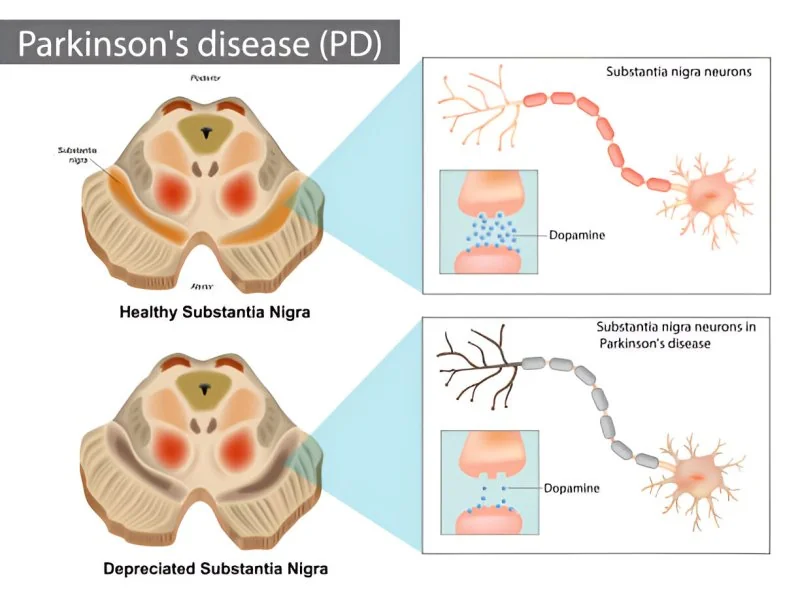
Substantia Nigra Pathology
Clinical comparison of healthy vs. depleted substantia nigra showing dopamine neurotransmitter deficit.
Symptoms of Parkinson's Disease
Early diagnosis is vital. Symptoms develop progressively across early, motor, and non-motor domains.
Tremors
Slight involuntary resting tremor in fingers, hand, or chin, often worsening under stress or fatigue.
Small Handwriting (Micrographia)
Handwriting progressively shrinks in size, becoming cramped, uneven, and difficult to decipher.
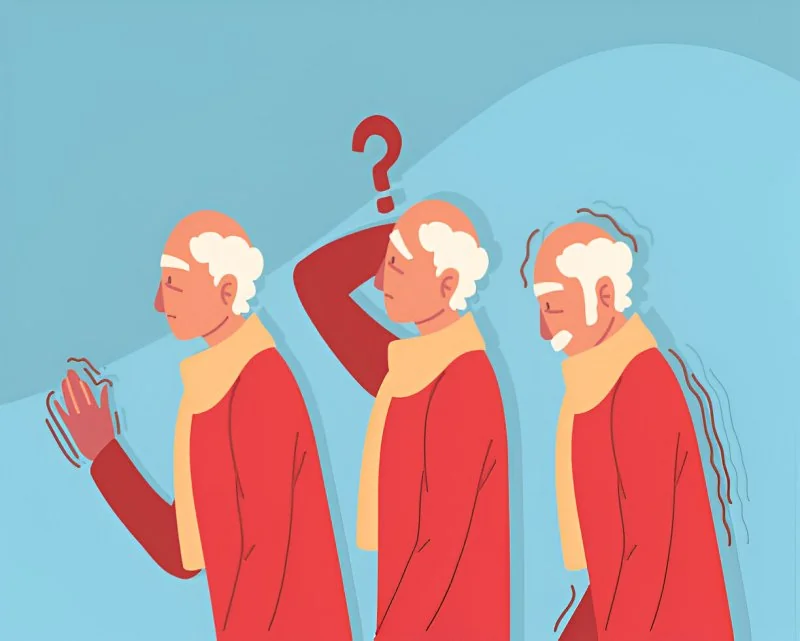 Early Clinical Sign
Resting Tremor & Postural Onset
Unilateral pill-rolling hand tremor and early stooped posture changes.
Slowed Movements (Bradykinesia)
Voluntary movements take longer and require conscious effort. Everyday activities like buttoning a shirt become slow.
Stiffness & Muscle Rigidity
Persistent muscle stiffness in arms, legs, or trunk. Reduced arm swing when walking accompanied by muscle aches.
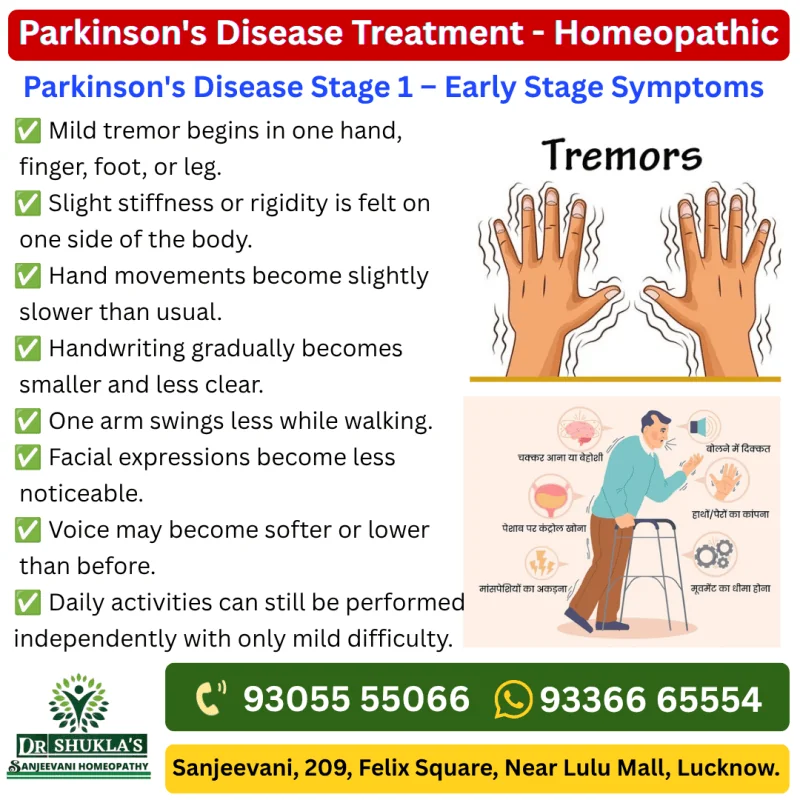 Stage 1 Overview
Stage 1 Symptom Profile
Mild unilateral tremor, early limb rigidity, and subtle loss of facial animation.
Facial Masking (Hypomimia)
Noticeable reduction in spontaneous facial expressions, creating a serious or emotionless 'mask-like' look.
Postural Instability
Impaired balance reflexes increasing fall risk. Difficulty stabilizing center of gravity when turning or stopping.
Shuffling Gait & Freezing
Shuffling steps with reduced clearance. Sudden 'freezing' episodes where feet feel glued to the ground.
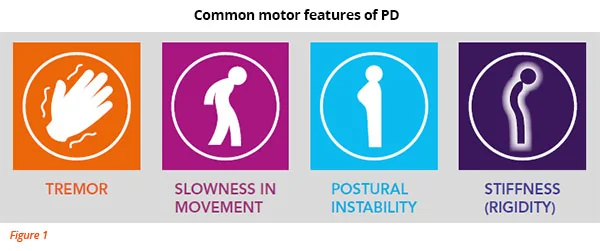 Cardinal Motor Signs
Common Motor Features of PD
Tremor, slowness in movement, postural instability, and muscular stiffness (rigidity).
Soft or Slurred Speech (Hypophonia)
Voice becomes soft, low-volume, and monotone. Words may slur together, making communication harder.
Swallowing Difficulties (Dysphagia)
Difficulty chewing and swallowing liquids or solids, with frequent choking sensation and saliva pooling.
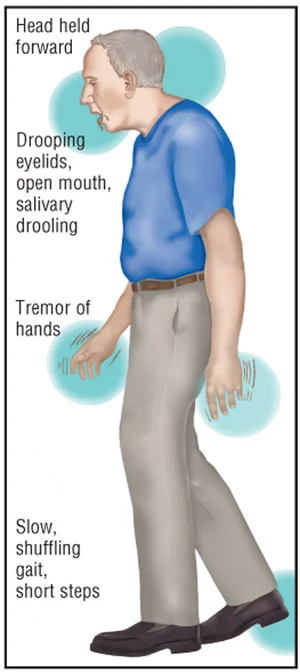 Gait Mechanics
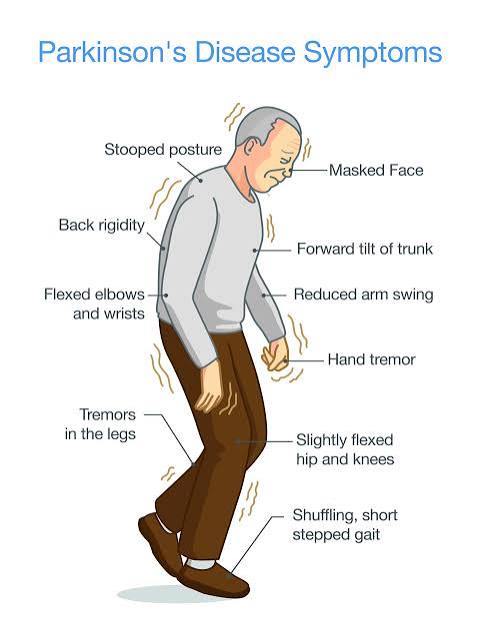
Shuffling Gait & Posture
Forward head tilt, hand tremor, lack of arm swing, and short shuffling strides.
Loss of Smell (Hyposmia)
Blunted sense of smell, frequently emerging years before physical motor signs manifest.
Sleep Disturbances & RBD
Restless sleep, vivid nightmares, and REM sleep behavior disorder with acting out dreams during sleep.
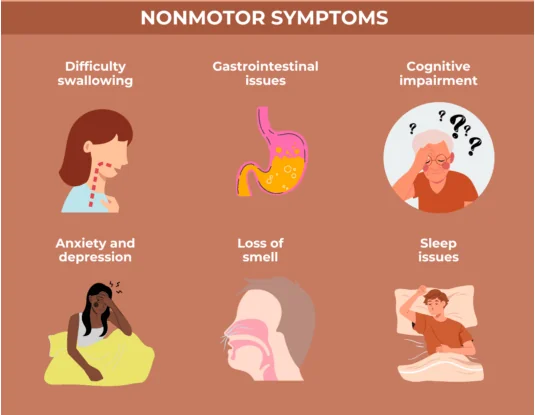 Systemic Spectrum
Non-Motor Symptom Spectrum
Swallowing issues, digestive dysfunction, sleep loss, depression, and cognitive fatigue.
Constipation & Gastrointestinal Issues
Slowed digestive motility leading to chronic constipation, bloating, and urinary urgency.
Mood Changes & Depression
Serotonin and dopamine alterations causing clinical depression, anxiety, apathy, and mood fluctuations.
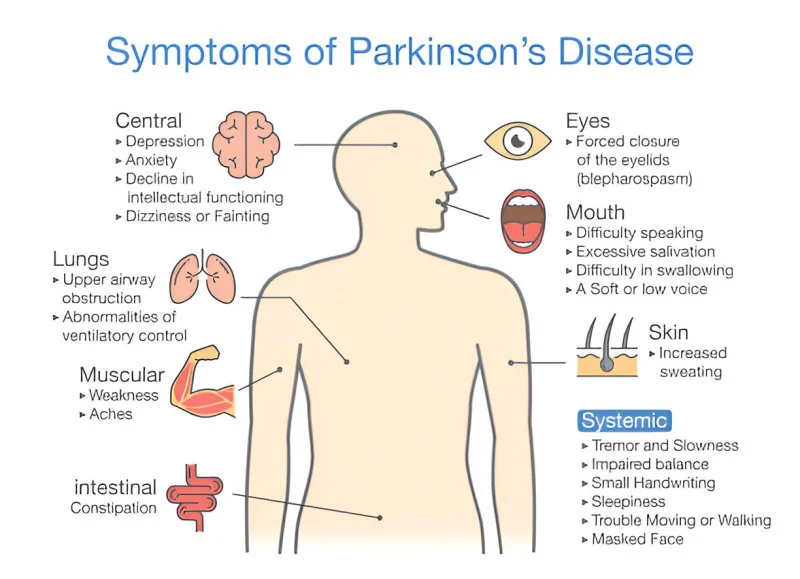 Autonomic Sign
Autonomic & Central Impacts
Full systemic involvement: central mood, intestinal slowing, perspiration, and fatigue.
Cognitive Impairment
Slowed mental processing, difficulty multitasking, memory lapses, and reduced concentration.
Yes. Over the last 25+ years, Dr. Jitendra Shukla has treated thousands of Parkinson's patients. Constitutional homeopathic medicines provide vital neuroprotection to the substantia nigra, reducing resting pill-rolling tremors, muscular cogwheel rigidity, postural unsteadiness, and bradykinesia (slow movements) naturally.
Yes, absolutely. Homeopathy is completely safe to integrate with allopathic medications. We never stop Levodopa abruptly. Instead, as your natural neurological motor control strengthens and tremors reduce, allopathic dosages can be gradually tapered under medical supervision to avoid 'wearing-off' fluctuations and drug-induced dyskinesias.
Conventional drugs only supply exogenous synthetic dopamine which fails to stop ongoing neuronal apoptosis (cell death). Deep-acting constitutional homeopathy reduces neuro-inflammation, clears toxic alpha-synuclein oxidative stress, supports mitochondrial health in dopaminergic neurons, and preserves independent motor function.
Homeopathy treats the complete patient totality, addressing debilitating non-motor symptoms such as severe chronic constipation, sleep disorders (REM sleep behavior disorder), anxiety, depression, brain fog, and low blood pressure (orthostatic hypotension).
Most patients report easier initiation of walking, reduced limb heaviness, and calmer sleep within 3 to 6 weeks. Stability in handwriting (micrographia) and facial expressions (mask-like facies) improves progressively over 4 to 8 months of consistent therapy.
Dr. Shukla provides dedicated video consultations for patients who cannot travel to the Lucknow clinic. You can send walking videos, tremor clips, and previous neurologist summaries via WhatsApp (+91 8400000666) to arrange your consultation.